




Yes, teaching kids robotics is a thing!
The STEM field pertains to more than just advanced mathematics and the physical sciences. Robotics is an exciting and rapidly expanding field that is more important than ever with the evolution and development of current technologies.
Today, the field of robotics is even more accessible to, you guessed it, kids!
In this article, we’ll cover what the field of robotics is, and what you need to know as a parent if your child is showing interest in learning more about it.
What is Robotics for Kids?
Robotics for kids has been around longer than you might think. During the 1970s and 1980s, robots were used in educational settings as a means of teaching robotics and other STEM disciplines.
Robotics was ahead of its time, though, as the specificity of classroom learning limited the adoption of robotics in other educational settings due to their price, unreliability, and limited applications.
Today, we know robots as devices capable of performing designated tasks, whether it’s on their own or under remote control. These bots come equipped with sensors and actuators, like cameras, motors, and wheels, enabling them to engage with their environment and accomplish various missions.
For example, robots can make a farmer’s job easier by helping them plant and harvest crops more efficiently. They can also lend a hand to doctors in the operating room, providing precise information.
Why is Robotics for Children Important?
Teaching kids robotics widens their understanding of real-world technologies and the field of science altogether, sharpening their creative thinking and problem-solving while fostering an innovative mindset.
Robotics makes it possible for children to develop skills they can apply to their future careers, but sometimes these brilliant minds can’t wait to showcase their inventions.
The Impact of Robotics for Kids

Meet Selin, a young visionary who got into robotics to build a canine companion after her family dog’s passing. Since then, Selin has completed seven different robotics projects, with her IC4U robotic guide dog helping people with vision impairments.
Selin was recognized with the Aspiring Teen Award by Women in Tech. Even kids are able to progress us into the future with their innovations, Selin is just one example of how incredible a child’s mind truly is in the world of robotics.
When Should We Start Teaching Kids Robotics?
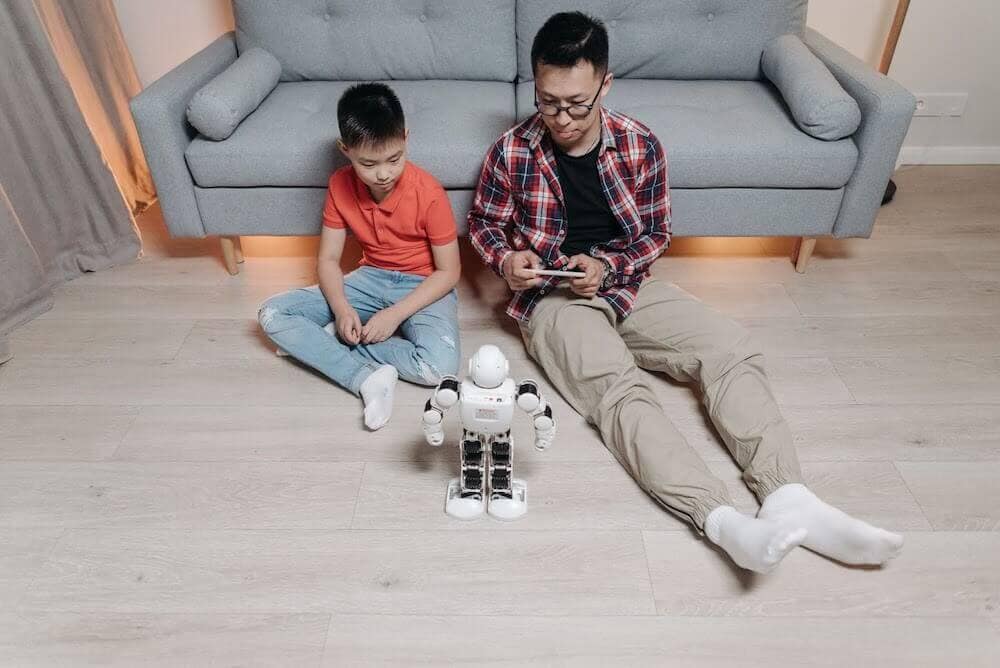
Tufts University’s Department of Development has conducted a study that shows the best age to start teaching kids robotics is around 7-8. Kids in this age range can more easily grasp STEM subjects which will help them when learning about robotics.
While it’s important to get kids interested in robotics early, we’ve also provided suggestions below on what elements of robotics a child should be learning in a certain age group.
Robotics for Kids in Grades 1-4
Children in grades 1-4 should be offered a program that imparts an understanding of real-world applications of robotics and the underlying technology. The curriculum should facilitate the construction of robotics projects with a focus on simplicity and minimal wiring.
Robotics for Kids in Grades 4-7
Kids in the age group for grades 4-7 should have access to a curriculum that delves into electronics and coding robots at the circuit level. The program should encourage independent thinking, enabling students to conceive and construct robotics projects autonomously.
Robotics for Kids in Grades 8 and Beyond
Students in the upper grades of 8-12 should delve into advanced robotics concepts, including IoT, Mechatronics, and AI. The curriculum should encompass advanced text-based programming languages to prepare students for college admissions and the pursuit of higher education if that’s what they’re looking for.
What Makes an Effective Robotics for Kids Curriculum?
Robotics takes time and dedication to learn, but recent technological and educational advancements make it easier for children to get started on developing STEM skills to succeed in robotics! This all starts with a good curriculum, which might include knowledge in things like:
-
- Hardware (robotics kits encompassing sensors, actuators, circuits, programmable boards, etc.)
- Programming and Coding to empower children with the ability to program and control robots.
- Understanding of Scientific Concepts (electricity, light, sound, magnetism, forces, buoyancy, etc.)
- Real-World Problem Solving
- Design Thinking and Creativity
- Communication and Collaboration
Enrolling your kids in our LEGO Robotics Camps or our Vex Robotics Camps or lessons that have an extensive and immersive robotics curriculum can help them enjoy the journey and continue their education long-term!
The Different Formats for Teaching Kids Robotics
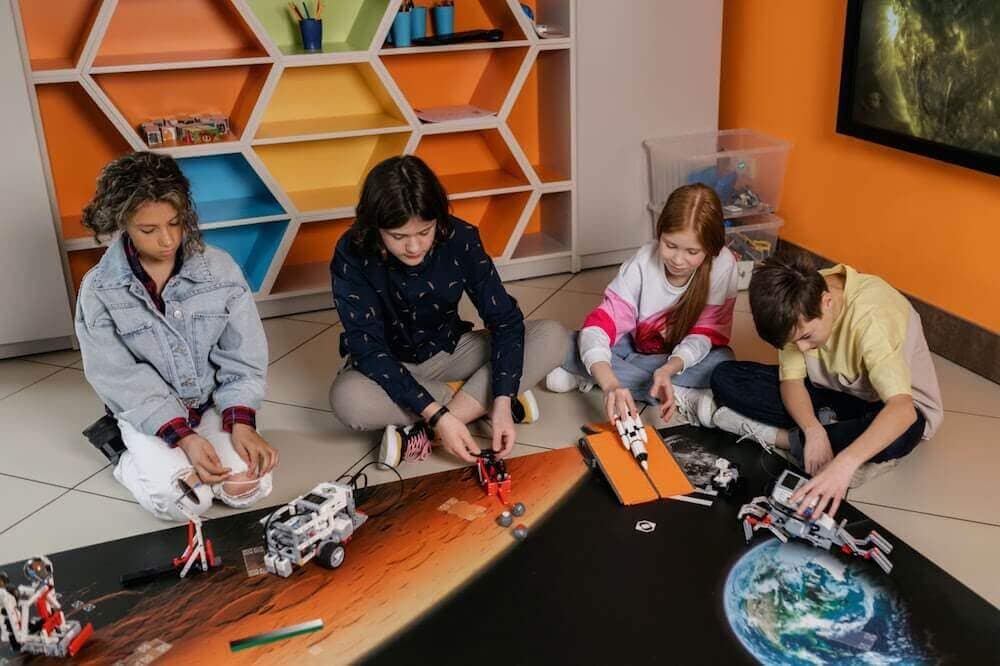
A classroom setting isn’t the only method of teaching kids robotics.
Online Robotics for Kids Courses
If in-person robotics courses aren’t in the books for the time being, online STEM camps in robotics are the next best thing. These courses offer flexible scheduling and convenient access to learning resources.
After-School Robotics for Children Classes
Afterschool clubs and classes give kids a chance to use equipment and software they might not have at home. Parents can pick from all sorts of places like community centers, schools, and private groups.
After-school programs are a great way to give your kids the opportunity to dabble in robotics before deciding if they want to get involved in more comprehensive robotics programs.
Robotics for Kids Summer Camps
Summer camps that focus on STEM principles like robotics for children are a great way to give your kids hands-on experience with building and coding robots using pulley systems, high-tech sensors, motors, and more!
Robotics summer camps also host frequent robotics competitions to challenge kids and put their knowledge to the test.
Experts in Teaching Kids Robotics
Embracing STEM education represents a future-oriented investment in our children, and Lavner Education stands as the global forerunner in teaching kids robotics and other forms of STEM education to foster the development of young minds.
As the world’s largest STEM tech camp provider, we’re proud to offer over 50 STEM subjects across 16 U.S. states.
Check out our robotics camps and explore how Lavner Education’s talented instructors help kids develop skills needed to shape a more brilliant tomorrow.